


Dental crowns are among the most used methods for restoring teeth in various situations. But when you need a dental crown, one of the most frequent questions is: what do you choose, zirconia or porcelain? Both options are modern and durable, but there are important differences between them. One of them is aesthetics; in this case, zirconia offers a better option.
Dental crowns are used to restore damaged or fractured teeth, or to complete implant-supported restorations. In practical terms, they "cover" the tooth and restore its shape, function, and appearance. There are several types of dental crowns, and modern materials such as zirconium and ceramic (porcelain) make it possible to achieve very natural-looking results that are hard to distinguish from natural teeth.
Find out when you need a dental crown, what are the advantages and disadvantages of each material, what prices exist, and how to choose correctly according to your situation.
When is a dental crown recommended?
A dental crown is recommended when a tooth can no longer be restored with a simple filling. If the tooth structure is significantly affected, a crown becomes the ideal solution to protect and restore the tooth. The most common situations where you might need a dental crown are:
- Large decayed teeth
- chipped or cracked teeth
- Root canal treated teeth (devitalised)
- dental implant work
- complete aesthetic restorations
The role of a crown is to protect the tooth from further damage, restore correct biting and improve the appearance of a smile. Furthermore, a well-made crown can last between 10 and 20 years, depending on the material and oral hygiene.
It is important to know that a dental crown is the final stage of treatment. Before this, procedures such as root canal treatment, tooth reconstruction, or even dental implants may be necessary.
Zirconia teeth
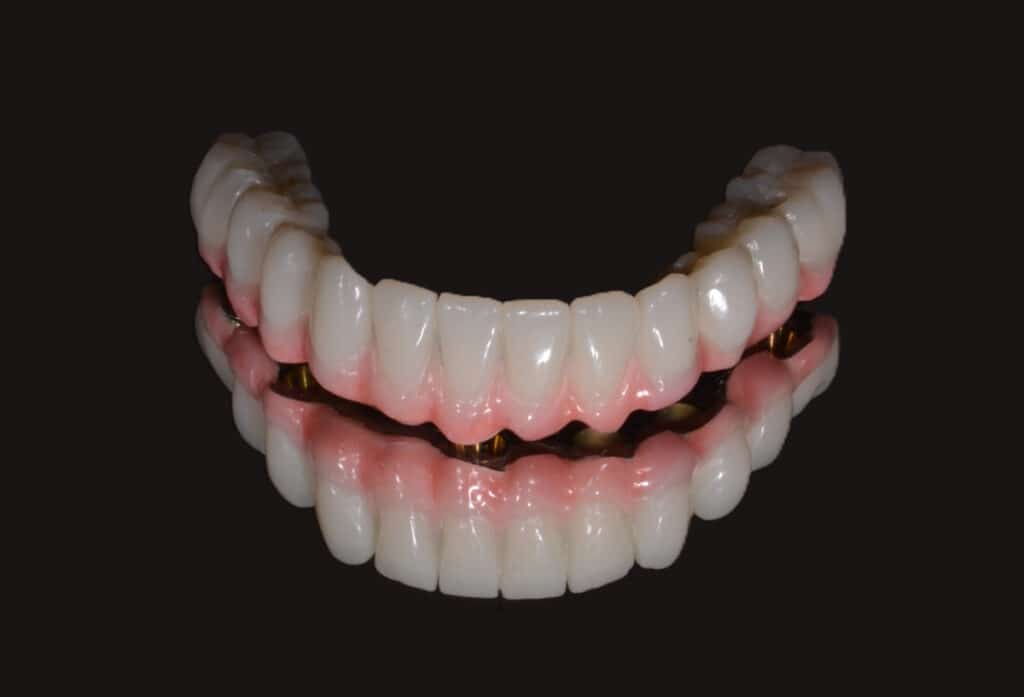
Zirconia is a cutting-edge ceramic material, highly durable and extremely popular in modern dentistry. Zirconia crowns are valued for their aesthetics and durability, and for the fact that they retain their colour over time.
Advantages
- Excellent aesthetics (very natural).
- Translucency similar to natural tooth
- High lifespan (15 – 20 years)
- it does not stain and does not yellow
- Excellent biocompatibility (does not cause allergies)
Another important advantage is that zirconium has a dense structure, making it ideal for patients who have high masticatory forces or bruxism.
Disadvantages
- Comparable or slightly higher cost
Porcelain teeth (ceramic crowns)
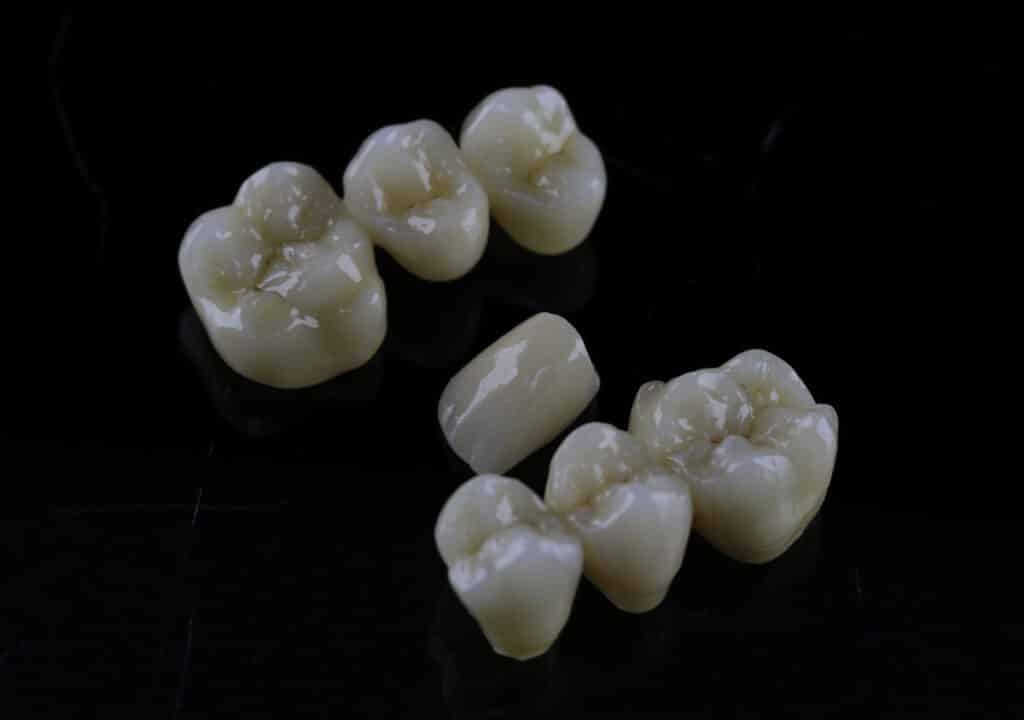
Porcelain (ceramic) crowns are particularly favoured for their strength
Advantages
- High resistance to wear and pressure
- biocompatible and well tolerated by the gums
- stable colour over time
Ceramic crowns are the perfect choice if you're looking for a durable smile.
Disadvantages
- Less aesthetically pleasing than cubic zirconia
The price of zirconia vs ceramic (porcelain) crowns:
At Dental Elite, in 2026, the prices for zirconium and porcelain crowns are:
Brașov
Bucharest, Voluntari
Ploiești, Buzău
How to choose between zirconium and porcelain crowns
The correct choice between zirconia and porcelain depends on several factors, not just preferences or budget. Each material has specific indications, and the dentist will determine the most suitable option for your case following a consultation and imaging investigations. Until the dental crown is fitted, you might need other treatments (endodontic treatment, dental implant, or others), which can influence the choice between different types of dental crowns. However, it is good to know the characteristics of zirconia and porcelain crowns:
| Characteristic | Zirconium | Porcelain |
| Resistance | very big | Hello |
| Aesthetics | Excellent | Hello |
| Lifespan | 15 – 20 years | 10 – 15 years |
| Price | between 1,800 lei and 2,470 lei | between 1,800 lei and 2,470 lei |
”The material for dental crowns is decided by the dentist, depending on the clinical situation. If the patient has very high aesthetic demands, we opt for a ceramic material or zirconium. If the demands are lower, we can also opt for metal-ceramics. The extent of the prosthetic work also matters,” explains Dr. Monica Ardelean, a dentist specialising in dental prosthetics, at Dental Elite.
The most important thing is to speak with your dentist. They will analyse:
- tooth position
- natural tooth colour
- type of bite
- The general condition of the teeth
Clinical case of a patient with zirconium and ceramic
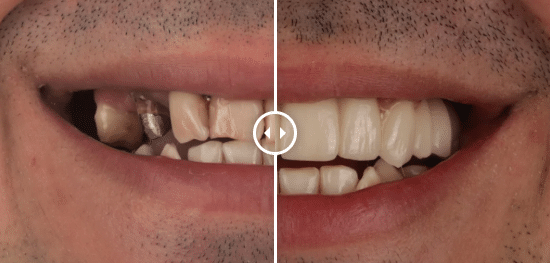
A 38-year-old patient, a case of maxillary rehabilitation, utilising intraoral scanning and the Digital Smile Design smile simulator. The materials used are cutting-edge Zirconia and Ceramic, alongside dental implants (Bredent Germany). Work performed by Dr. Alexandru Ciucu.
Clinical case of a patient with ceramic on zirconium
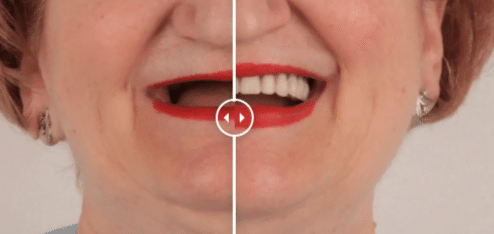
A 60-year-old female patient, a case of full bimaxillary oral rehabilitation with Straumann dental implants. Final work with ceramic on zirconia. Work carried out by Associate Professor Doctor Alexandru Burcea and Dr. Alexandru Ciucu.
FAQ – Frequently Asked Questions about Zirconia and Porcelain Teeth
No. Zirconia is a very stable material and does not change colour over time. If you notice shade differences, they are usually between the crown and natural teeth.
The average lifespan is between 10 and 20 years, depending on the material, hygiene, and habits (e.g., teeth grinding).
Zirconia is more aesthetically pleasing and extremely durable. Porcelain is also durable, but less aesthetically pleasing than zirconia. However, the choice depends on your situation, aesthetic preferences, and budget.
Prices range from 1,070 RON to 2,470 RON, depending on the material and city.
It is normal for mild pain to occur, however, this is temporary and only appears during the adaptation period to the new dental structure. If the pain persists, you need to schedule a check-up with your dentist.
Yes. After adaptation, you can eat normally, regardless of the type of crown.
They are resistant, but not as strong as zirconium.
Yes. Dental crowns are frequently used for implant restorations.
If done correctly, the differences are minimal or nonexistent.
Yes. At Dental Elite, you have options for Instalments for dental treatments.