

Treatment with dental implant it means a life changed for the better, a complete set of teeth, which helps you eat anything, have good digestion, and smile without reservations. But to enjoy these benefits long-term, you must follow a few basic rules after the procedure. Correct nutrition after dental implants includes a series of products and excludes others, to help The healing process. Dairy products or hot coffee are on the list of forbidden foods in the first few days after surgery.
How much does diet matter after dental implant treatment
Modern materials, advanced technologies and the experience of dentists are essential for the success of an implant. However, what you do at home after the procedure is equally important. Diet and oral hygiene play a major role in how your body heals.
In the early days, the tissues around the implant are sensitive. An unsuitable diet can cause inflammation, discomfort, or even complications. Conversely, a proper diet supports regeneration, reduces the risk of infection, and helps the implant integrate correctly into the bone.
Your dentist, with expertise in oral implantology, will explain exactly which foods are recommended and which should be avoided, so that healing proceeds smoothly.
List of foods to avoid after a dental implant
To protect the sensitive tissue around the implant, you need to avoid a number of foods:
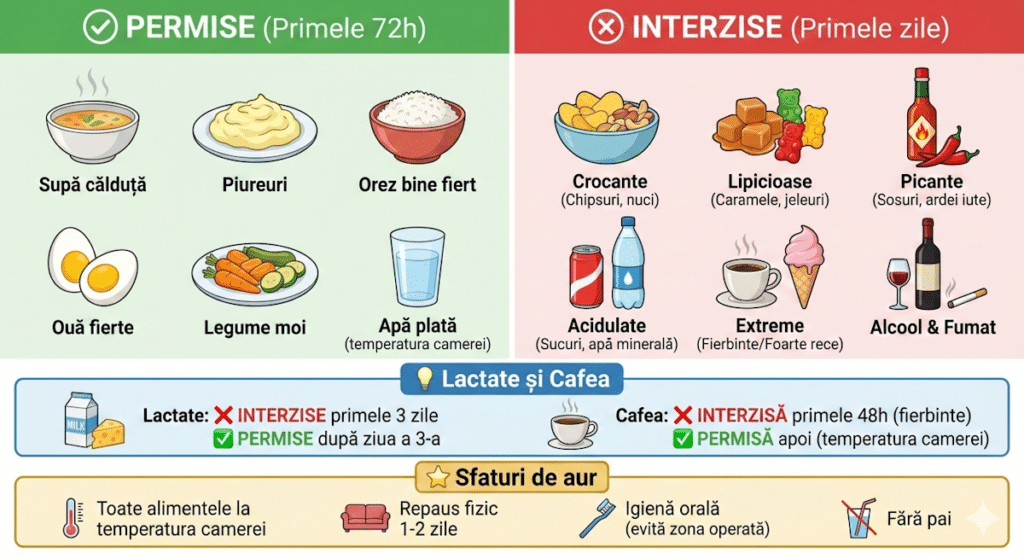
- Crunchy foods: crisps, pretzels, crunchy biscuits, toast, peanuts, seeds, popcorn
- very hot or very cold foods: hot soups, very hot tea or coffee, ice cream, drinks with ice
- sticky foods, which can get stuck around the implant: toffees, jellies, chewing gum, soft sweets that stick to the teeth
- Spicy foods, which can irritate tissues: hot dishes, spicy sauces, hot peppers, strong spices
- Carbonated drinks: fizzy juices, carbonated mineral water, energy drinks
- dairy products, in the first few days: milk, yoghurt, cheese, cream
- alcohol: may increase the risk of bleeding and slow down healing
- coffee, especially hot coffee, as it can irritate the area that has been operated on and may delay recovery
Tooth implant aftercare
Dairy products are among the foods that should be avoided following dental implant treatment. In the first few days, it is advisable to avoid them, even if they are part of a normal, healthy diet. The main reason is that dairy products can encourage the growth of bacteria in the mouth, particularly in an area that has recently undergone surgery.
Additionally, certain dairy products can interfere with prescribed post-operative medication, particularly antibiotics. Their texture and temperature can also cause further discomfort in the sensitive area. After the first 3 days, dairy products can be gradually reintroduced into the diet, as they are an important source of calcium for bone regeneration.
Coffee after dental implant
Coffee is forbidden In the first 48 hours after the procedure, especially if it's hot. High temperature can encourage bleeding and irritate healing tissues. In addition, the acidity of coffee can irritate the sensitive tissues around the implant, and caffeine can contribute to dehydration and slow down recovery.
Resuming coffee consumption is done gradually, usually after a few days, when the inflammation has subsided. It is recommended to drink it at room temperature and in moderation, as advised by your doctor.
Recommended diet following surgery
In the first 72 hours
Generally, in the first 72 hours after implant insertion, it is preferable to consume soft or even liquid foods, such as: soup, boiled vegetables, rice, pasta, boiled eggs, purées. Food should be at room temperature, not hot.
Still water is the best drink at this time of year. Avoid sugar-sweetened juices, fizzy drinks and alcohol.
”In the first 2-3 days post-procedure, a softer diet at room temperature is recommended; nothing very hot and nothing fizzy. Regarding physical exertion, a short rest of a day or two after the procedure is also advised, to avoid promoting bleeding. Otherwise, old eating and exercise habits can be resumed after a week,” explains Dr. Sabina Iftimi, a specialist doctor in dento-alveolar surgery and dental aesthetics.
After 3 days from surgery
After the first few days, you can begin to diversify your diet slightly. Gradually introduce more substantial foods, but continue to avoid hard, crunchy, or very spicy foods. Chewing should be gentle, without any pressure on the implant area.
In the long term
Once you have fully recovered, you can return to your normal diet. A balanced, nutrient-rich diet helps to maintain the long-term health of your gums and your implant. Staying properly hydrated and attending regular check-ups remain essential.
Smoking and dental implants
Smoking has a direct impact on healing after a dental implant. Nicotine reduces blood flow to the gums, which means less oxygen and fewer nutrients reach the area where the surgery was performed. In short, the tissues take longer to heal, and the risk of inflammation or infection increases.
In the first few days after the procedure, it is recommended that you avoid smoking completely. Even a few cigarettes can affect the healing process. If you are unable to give up completely, try at least to cut down significantly and follow the advice given by your doctor. The longer the break, the better your chances of a full recovery.
More advice for a quick recovery after dental implants
Recovery after a dental implant isn't just about diet. There are a few simple things you do daily that can make a big difference in how the surgical area heals. Rest is important after the procedure. Avoid strenuous physical activity and sports, as they can promote bleeding.
Furthermore, oral hygiene plays.
You must take your prescribed medication exactly as instructed. Do not stop taking your antibiotics early, and do not alter the doses of your painkillers. Even if you feel better, completing the full course of treatment helps to prevent infections.
Avoid touching the implant area with your tongue or fingers. Even if it seems like an harmless gesture, it can irritate the gum and introduce bacteria. Also, do not drink through a straw or rinse your mouth vigorously, to avoid affecting healing.
Do not delay your post-operative check-ups. These allow your doctor to monitor your recovery and take prompt action if anything unusual arises.
FAQ – frequently asked questions about diet following dental implant surgery
Usually, a few days. The doctor will tell you exactly when you can reintroduce them, depending on how the healing is progressing.
There is no need to panic, but if pain, swelling, or bleeding occur, it is advisable to inform your doctor.
Soups are recommended, but they should be lukewarm, not hot.
Ideally, you should avoid smoking for at least 72 hours after the procedure. Also, the longer you manage to refrain from smoking, the better the healing will be. The first few days are the most important for implant integration.
Bleeding, inflammation, or increased discomfort may occur. In some cases, smoking immediately after the procedure can affect osseointegration. If this happens, do not panic, but inform your doctor and strictly follow their instructions.
Yes. Alcohol can promote bleeding and slow down the healing process. It can also interact with prescribed medications after the procedure. It is recommended to avoid alcohol, at least in the first few days.
Generally speaking, it is best to avoid alcohol for at least 3–5 days after the procedure. If the treatment was more complex, or if your doctor has specifically advised you to do so, this period may be longer.
Hot coffee is forbidden in the first few days. The high temperature, as well as the acidity of the coffee, can irritate the operated area and promote bleeding. After a few days, you can consume coffee at room temperature, in moderation, if no discomfort occurs.
Even if it doesn't contain caffeine, the problems are related to temperature and acidity. That's why the rule is the same: wait a few days, and then consume lukewarm coffee, not hot.
Even without antibiotics, it is recommended to avoid dairy products after surgery. They can encourage the development of bacteria in the oral cavity, and the implant area is sensitive. Once healing begins to progress well, dairy products can be gradually reintroduced.
Choose soft, easy-to-swallow foods: lukewarm soups, purees, well-cooked rice, soft pasta, boiled eggs. Chew slowly and avoid the implant area. If in doubt, ask your doctor at your post-operative check-up.
Usually, after a few days or a week, depending on how the operated area heals. Don't rush things. If pain or inflammation occurs, temporarily return to soft foods.
Yes, slight discomfort is normal in the first few days. If the pain is severe, persistent, or worsening, it is important to inform your doctor.