

Healthy teeth are a powerful ally for your smile, but also a medical necessity. If you have missing teeth, treatment with dental implant This is an important decision for the health of your entire body. But before you begin, it's good to be informed about the details that accompany the procedure, and healing time is a normal concern. An inflamed gum can affect chewing or speaking, which is why it's important to understand the entire recovery process.
Thanks to modern dental techniques, healing the initial symptoms takes a few days. However, it's important to remember that both the dentist and the patient contribute to a good and long-lasting result. After successful surgery, you must take care of your teeth at home, maintain rigorous hygiene, and consume soft foods for the process to go well and for recovery to happen as quickly as possible. Proper healing has important advantages: long-term tooth functionality, good oral health, and aesthetic benefits (you can smile confidently again).
In short, about gum healing after an implant:
- In the early days pain, inflammation and tenderness may occur
- After 1-2 weeks the sting is visibly closing and the discomfort is gradually disappearing
- After a few months The implant is integrated into the bone and you will benefit from definitive dental crowns
To help you understand how the entire healing process works, here are the stages the gum goes through step-by-step during and after the dental implant insertion.
What Does Dental Implant Treatment Involve
A dental implant is a medical device made of titanium, shaped like a screw, which replaces the root and is recommended for people who are missing one or more teeth.
The first step of the treatment is a consultation with the dentist, followed by an X-ray or dental CT scan and, if necessary, blood tests. Based on these investigations, the dentist establishes the treatment plan: the density and volume of the jawbone, the need for bone grafting, and type of implant suitable for you.
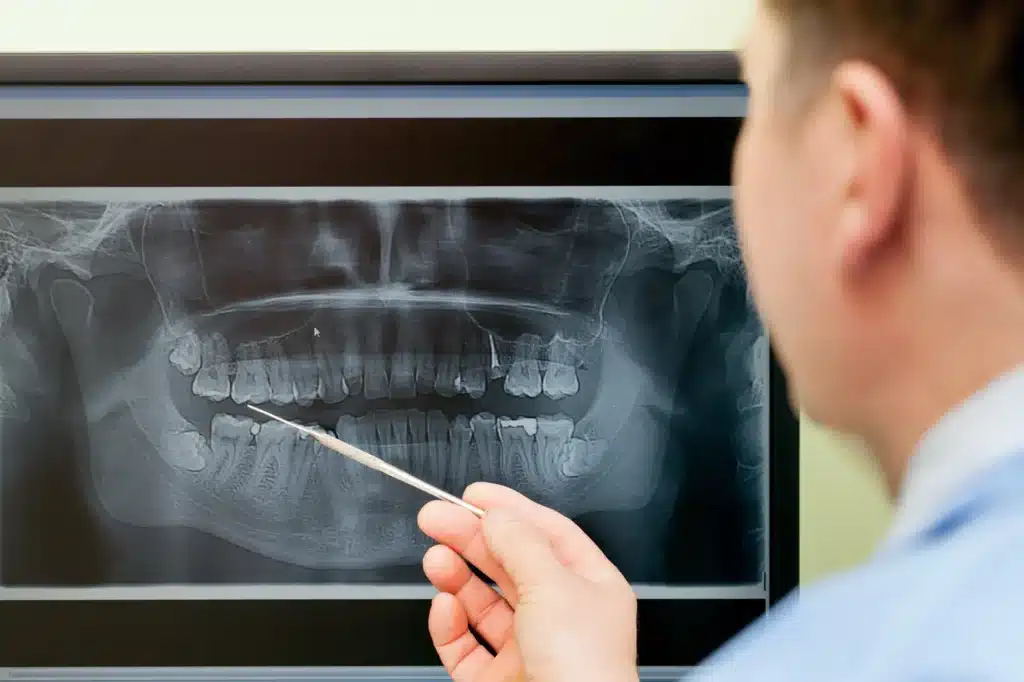
The steps of complete surgical intervention:
- administration of local anaesthesia or sedation
- extraction of a tooth that can no longer be saved (if applicable)
- bone augmentation or other additional procedures (e.g. sinus lift)
- the insertion of a dental implant into the maxillary or mandibular bone, which will replace the root of the missing tooth
- fitting the healing abutment, and the provisional restoration will be fixed 24 hours after the procedure
- osseointegration, which takes approximately 3-6 months
- Fitting the prosthetic abutment and fixing the definitive dental crown
In the case of fixed teeth procedures, the prosthetic abutment is fixed immediately after implant insertion, and the temporary dental crown is fitted shortly after.

Immediately after a dental implant is placed
You can expect a few symptoms to appear after dental implant surgery, but the discomfort is temporary and gradually improves in the first few days. Depending on the complexity of the procedure, the most common manifestations are:
- Moderate pain. The dentist will prescribe painkillers for a few days, which will help alleviate discomfort
- Swelling which can occur in the first 24-48 hours after the intervention and is a natural response of the body to the surgical procedure
- Slight bleeding, which usually stops on its own and is easily managed by following the doctor's recommendations
- Difficulty chewing in the first few days, which disappears as inflammation and pain reduce.
- Gum sensitivity and slight discomfort when speaking, especially with the front implants.
How long does the gum take to heal after an implant?
The gum visibly closes between 7 and 14 days. Superficial healing lasts between one and two weeks, after which the sutures can be removed. Complete gum recovery occurs in approximately 6–8 weeks. At the same time, osseointegration, meaning the process by which the dental implant fuses with the bone, takes longer, between 3 and 6 months, depending on the body and the complexity of the procedure.
The difference between gum healing and implant healing (osseointegration):
- Gum healing The soft tissues (gums) are regenerating and there is no longer inflammation or sensitivity.
- complete healing of the implant (osseointegration): internal process by which bone fuses and integrates around the implant, ensuring long-term stability
Thus, the gum recovers relatively quickly (in a few weeks), but the implant only becomes fully functional after a few months, when the osseointegration process is complete.
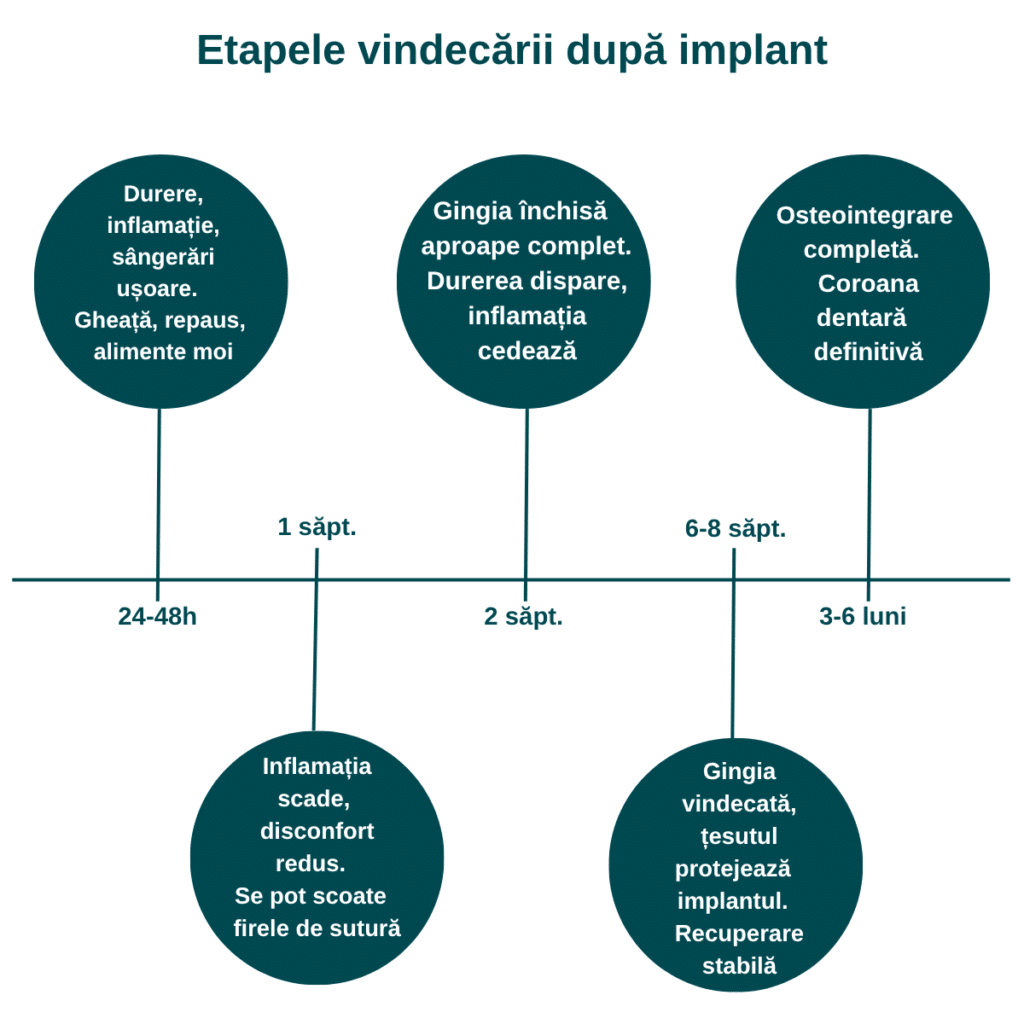
The stages of healing after a dental implant
Gum healing and the tissue around the implant begin immediately after surgery. Here's what happens, step by step:
The first 24-48 hours
During this period, the gum will be painful and sensitive, and light bleeding is normal. The doctor will prescribe anti-inflammatories, painkillers, antibiotics, and advice for these days to alleviate discomfort: ice packs, consumption of soft foods, use of an antiseptic mouthwash, and avoidance of strenuous physical activity.
1 week
The inflammation is starting to reduce visibly, discomfort will lessen, and you'll be able to chew more easily. You'll go for a check-up, and the doctor will remove the stitches if your gum has closed sufficiently.
2 de săptămâni
The gum is almost completely closed on the surface. Pain and inflammation disappear, and the area looks normal, but still requires protection and strict hygiene.
6-8 weeks
The gum heals completely. The tissue closes around the implant, sealing the area and protecting the implant and bone from bacteria or food debris.
3-6 months
Osseointegration takes place: the bone fixes permanently around the implant, the gum looks healthy, with no signs of inflammation. At this stage, the dentist fits the prosthetic abutment and the definitive dental crown.
What factors influence dental implant recovery
The healing process after a dental implant is not identical for all patients. The duration and quality of recovery depend on a number of factors relating both to each individual's body and to how well you follow the dentist's recommendations. Here are the most important factors that can influence gum healing and implant integration:
Oral hygiene
Your dentist will recommend rigorous oral hygiene after dental implant treatment. Gentle brushing (with very soft bristles), using antiseptic mouthwash, and a water flosser will help prevent infections and promote faster healing.
Postoperative drug treatment
You must strictly follow the treatment prescribed by the doctor. This may include anti-inflammatories, antibiotics, and painkillers to combat any potential infection and to help you manage pain.
Food and drink
A balanced diet, but with soft foods, supports the regeneration of tissues and bone. Sufficient water intake helps maintain oral health and reduces the risk of inflammation.
Smoking and alcohol
Smoking delays gum healing and can compromise osseointegration, while alcohol irritates the mucosa and increases the risk of infections. You will be advised to avoid them for the duration of your recovery.
Chronic conditions
Diabetes, cardiovascular diseases or other systemic conditions can slow down the healing process. If you have chronic illnesses, you need to keep your conditions under control and inform your doctor before treatment.
Age
Young people recover more quickly, while in older individuals the healing process can take longer, due to decreased bone density and reduced tissue regeneration capacity.
Risks and possible complications
Like any surgical intervention, dental implants can carry risks, although these are very rare. Possible complications include gum infections, inflammation of surrounding tissues, or, in isolated cases, implant rejection.
If you carefully follow the doctor's instructions, maintain good oral hygiene, and attend recommended check-ups, the chances of these problems occurring are minimal. In essence, you have everything you need to ensure the healing process proceeds without complications and that the implant is a stable and long-lasting solution.
FAQ – Frequent Questions
After how long can one eat after a dental implant?
You can consume cold liquids immediately after the procedure, but it is recommended to have your first soft foods after 2-3 hours. It is advisable to chew on the opposite side of the implant to avoid pressure on the operated area.
What foods can be eaten after the procedure?
In the early days, pureed soups, mashed foods, yogurt, soft cheese, soft-boiled eggs, and smoothies are recommended. Avoid hot, hard, or crunchy foods, which can irritate the gums.
How long does swelling last after a dental implant?
The swelling usually appears within the first 24-48 hours and begins to subside gradually. Within 5-7 days it should disappear completely, especially if you apply cold compresses, as recommended by your doctor.
How long does it hurt after a dental implant?
The pain is moderate and feels most intense in the first 2-3 days. With the prescribed treatment, the discomfort decreases rapidly, and after 7-10 days the pain should disappear.
How long should you apply ice after an implant?
Cold compresses are applied to the cheek for the first 24-48 hours, for 15-20 minutes at a time, with breaks between applications. After this period, it is no longer necessary, as the inflammation subsides on its own.
Can you drink coffee after a dental implant?
Not within the first 48 hours after the procedure. The reasons why it is contraindicated for at least two days are: you must avoid hot foods, and the acidity of coffee can irritate the tissue around the implant.