


If you're considering having a tooth redone and you've reached the point where you're looking for the price of a porcelain tooth dental crown ceramics, as it is called in dentistry), in 2026, you have probably noticed that the differences between materials are quite large. Costs range from affordable options to premium choices, depending on what exactly you are looking for: strength, aesthetics, or a balance between the two.
Porcelain veneers remain among the most popular options for patients seeking a natural and durable result. Prices vary from one city to another, from one material to another, and depend on durability, as well as the doctor's experience. When choosing a clinic for your treatment, inquire about the technologies used and the cases resolved by the doctors, and ensure high quality, not just price.
What are porcelain teeth (ceramic dental crowns)
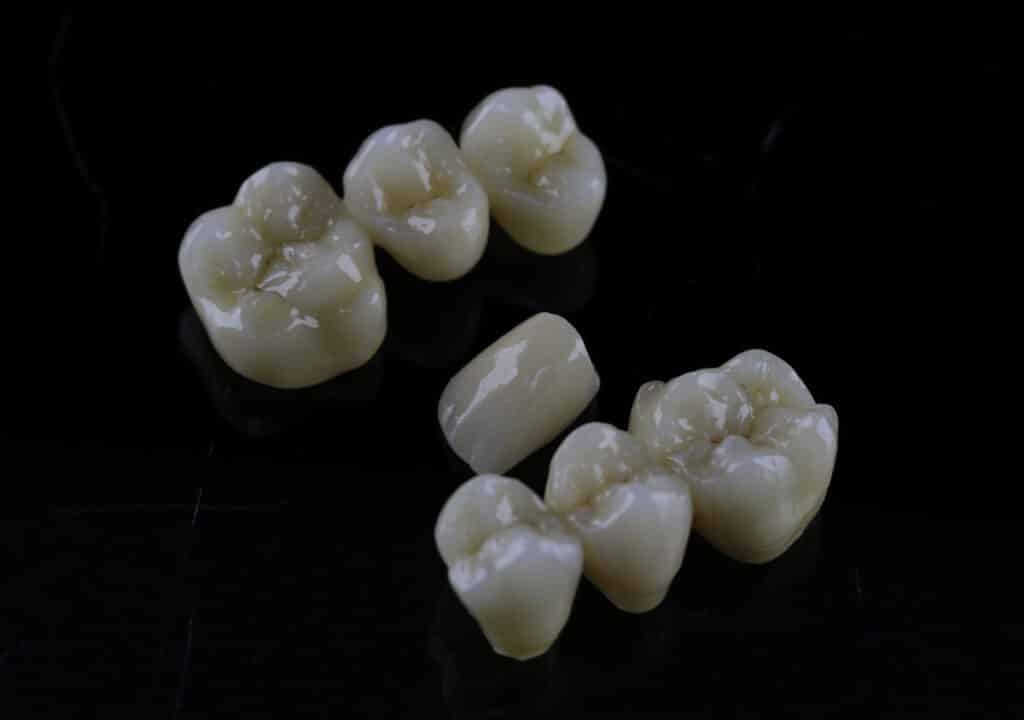
A porcelain crown (ceramic dental crown) is a prosthetic piece that covers the entire tooth or is fixed onto a dental implant. The crown completely covers the tooth, restoring its shape, colour, and strength, and for many people represents the ideal solution when a tooth is too damaged to be repaired with just a filling.
The advantages and situations where you need porcelain teeth
Ceramics are usually used when a tooth requires a full restoration, either due to extensive decay or for placement on a dental implant. A porcelain tooth is a suitable option if you desire a uniform smile with a stable colour, free from stains or shade variations.
Crowns are very popular for their natural appearance and for the fact that they integrate well with the rest of your teeth. They are comfortable, do not cause allergic reactions, and remain stable long-term.
The average price for a porcelain tooth in 2026
There are several variants of ceramic, each with its own advantages and a different cost. The differences mainly come from how they are produced and how durable the material is over time. Here are the types of dental crowns ceramic
The price of a ceramic (porcelain) dental crown
Classic ceramic is the standard option and offers a natural look, suitable if you're looking for an aesthetic solution at an affordable price. It is well-tolerated by the gums, and the colour remains beautiful over time (10-15 years). In 2026, at Dental Elite, a classic ceramic crown starts from approximately 1,800 lei in Brașov, and in Bucharest, it can reach 2,870 lei.
The price of a pressed ceramic dental crown (EMAX)
Pressed ceramic, known as EMAX, is a modern and highly regarded option for its balance of aesthetics and strength. The material is dense, durable (15–20 years), and offers a natural appearance without the need for compromise. Generally, costs start from 1,800 lei.
Ceramic (porcelain) dental crown vs. zirconia crown
While porcelain is chosen for its natural appearance, zirconium is valued for its excellent strength. The price difference between them is not always significant, however, zirconium can be slightly cheaper, despite having higher durability (15-20 years). A zirconium dental crown costs between 1,800 lei (Brașov) and 2,595 lei (Bucharest).
Price list for ceramic dental crowns (2026), at Dental Elite
| Dental crown tip | Price Brașov | Price Bucharest, Voluntari | Price Ploiești, Buzău |
|---|---|---|---|
| Ceramics (porcelain) | – | 2,870 lei | 2.100 |
| Pressed ceramics (EMAX) | 1,800 lei | – | |
| Zirconia ceramics | 1,800 lei | 2,595 lei | 1.990 |
Additional costs in ceramic teeth treatment, in 2026
You need to know that a ceramic crown is the final step in restoring a tooth. Until the crown is fitted, you may require various treatments specific to the dental problem you are facing. If the tooth is damaged, decayed, needs root canal treatment, extraction, or an implant, these come with additional costs. Here are two examples:
Price for treatment of heavily decayed teeth + porcelain tooth
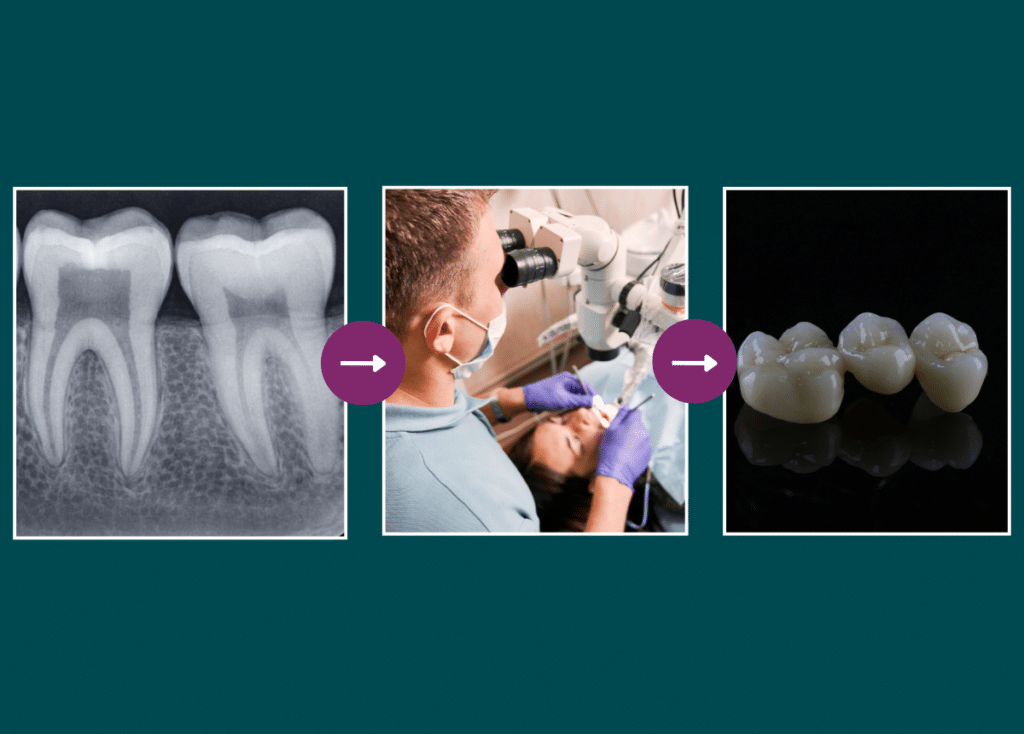
If the dentist detects extensive decay or destruction of the tooth structure, it may first require an X-ray, root canal treatment, shaving down the natural tooth, and only then the application of a ceramic crown. In this scenario, the total budget for reconstruction and restoration may obviously exceed the price of the crown. Here is a possible price list for this treatment:
- Digital retroalveolar radiograph – starting from 55 lei (Brașov) and 65 lei (Bucharest and Voluntari)
- Endodontic treatment – root canal filling under microscope, from 855 lei
- porcelain tooth – price starting from 1,800 lei
Dental implant treatment + porcelain tooth price
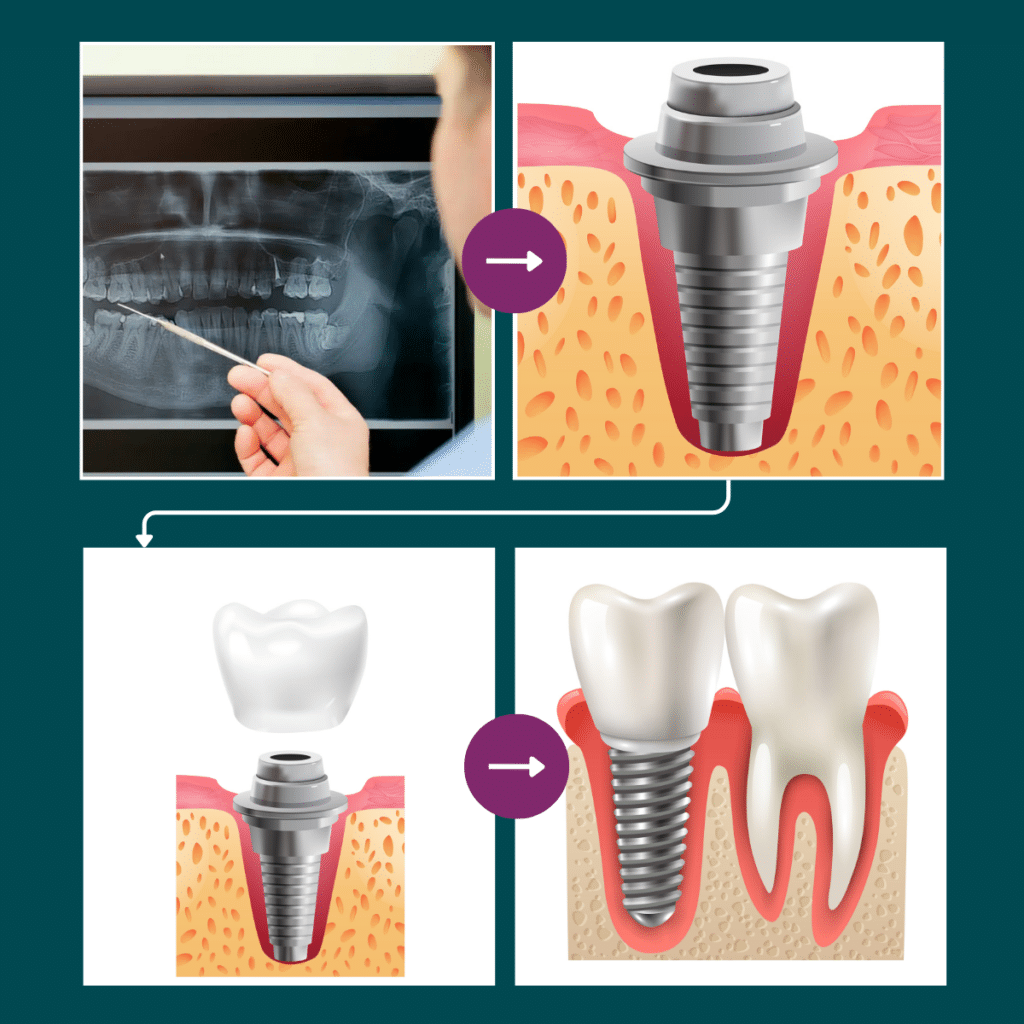
If the tooth can no longer be saved, the solution could be an implant + crown. The list of costs will include: the implant itself, the abutment (the link between the implant and the crown), any prior procedures (extractions, bone grafts), consultations, X-rays / CBCT, etc. Thus, the final price for a porcelain tooth fitted on an implant can be significantly higher than the price for a crown alone. Here is a possible price list for this treatment:
- Dental implant (screw), with prices starting from €500 (the healing abutment and prosthetic abutment are additional parts that add to the total cost)
- The price for a temporary crown starts at 100 lei.
- The price for a permanent ceramic crown starts from 1,800 lei.
- Other costs: analyses, panoramic X-rayprice here), CT and bone graft
Other factors influencing the price of a ceramic crown
The cost of a ceramic crown is also influenced by:
Dental clinic
Prices can vary quite a bit from one clinic to another, and the differences aren't just down to location or city. Some clinics use modern technologies, have their own laboratory, and invest in digitisation and quality materials. All of this is reflected in the final cost, but also in the quality of the work. Generally, a clinic that works with experienced technicians and high-performance equipment offers more precise results, which can justify a slightly higher price.
The dentist's experience
A dentist with experience in dental prosthetics and many completed cases may have higher fees, but the difference is seen in how the crown fits, how the bite is adjusted and the comfort you feel after treatment. A professional knows how to choose the right material, collaborate effectively with the laboratory and avoid repeated adjustments. Essentially, you pay for expertise, not just the crown.
The materials used and the technology with which it is processed
The quality of the ceramic and the way the crown is made directly influence the price. Standard ceramics are more affordable, while higher-quality options, such as EMAX, involve better-performing materials and longer laboratory working times. Furthermore, if the work is carried out digitally, with intraoral scanning and CAD/CAM milling, costs may increase, but the advantage is a much more precise fit and a more natural final result.
FAQ – Frequent Questions
Generally, between 10 and 20 years, depending on the material, how it's maintained, and the patient's habits. Correct brushing and regular check-ups help a lot.
Yes, in most cases. The dentist will decide if the tooth can support a crown or if you need treatment beforehand, such as a post or root canal treatment.
Ceramics retains its colour, even after years. If changes do occur, they are usually from the gum or from old restorations nearby.
There's no real difference between them. Porcelain is the term used in everyday language, and ceramic is the term used by dentists. Both refer to the same material, the same type of crown, and the same outcome. When you see „porcelain crown” or „ceramic crown,” it's about the same thing.
Porcelain looks very natural and is the preferred choice when you want a result as close as possible to your real smile. Zirconia is more resistant and better withstands pressure, making it a very stable long-term option. If you want a perfect aesthetic appearance, ceramic remains the primary choice. If you are more interested in durability and resistance, zirconia might be more suitable. In many cases, the choice is made together with the dentist, depending on the type of treatment and the final objective.